
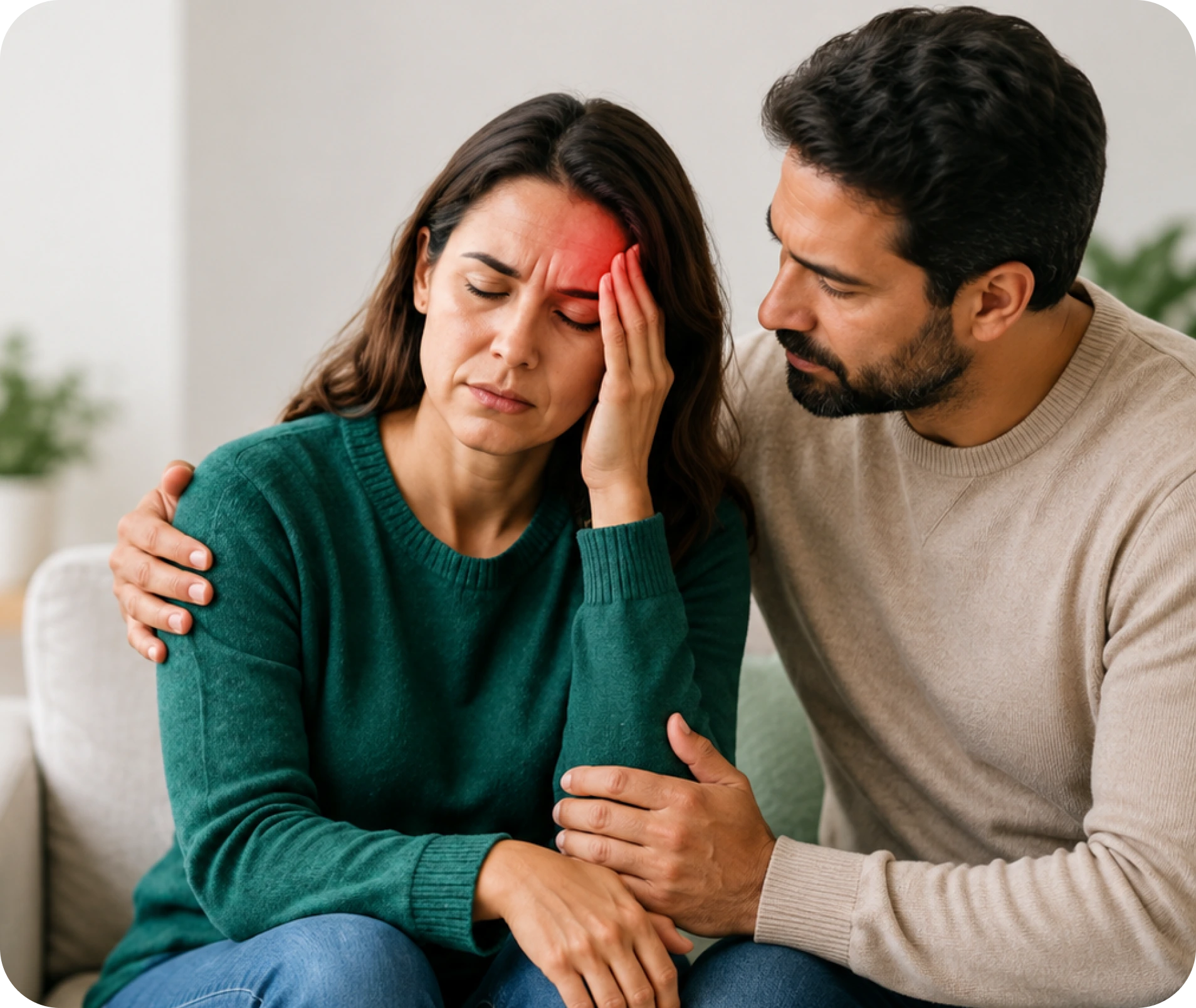
A first fit is frightening, and it is often the people around you who saw what happened rather than you. What they noticed matters as much as what you remember.
There is no “all clear” result for a first seizure on this platform. NICE is unambiguous: every suspected first seizure needs a specialist opinion. So the lowest outcome the check can give you is amber, meaning book a specialist appointment. It will never tell you to sit tight and do nothing.
Do it now. Every minute makes a difference.
Four parts of a first-seizure assessment simply cannot be done down a camera. This is why the check always routes a first seizure to a face-to-face appointment.
Source: NICE CG137 — specialist assessment within two weeks; NICE NG217
This applies from the moment the seizure happened, not from when you get a diagnosis.
Cars and motorbikes (Group 1): you must normally be free of seizures for six months before you can drive again.
Lorries and buses (Group 2): the period is five years.
Telling the DVLA is your legal responsibility, and it is a criminal offence not to. We cannot do it for you. Your consultant will give you a letter setting out their assessment, and your seizure package includes it, but you must make the declaration yourself.
Check your own situation on GOV.UK, because the rules differ depending on the type of seizure and whether it happened while you were asleep.
Source: DVLA Assessing fitness to drive (GOV.UK)

Bring this to your appointment. It changes the diagnosis more often than any scan.
What you were doing in the minutes beforehand
Whether you went stiff first, and which way your head or eyes turned
How long the shaking lasted, timed if possible
Whether you bit your tongue, and if so which part
Whether you wet yourself
How long it took you to come round, and whether you were confused afterwards
Whether you had been drinking, missed sleep, or missed a dose of any medicine
Source: NICE CG137 — eyewitness account central to seizure diagnosis
A number of common medicines lower the level at which the brain will fit. Bupropion, used for stopping smoking and for depression, is one of the clearest examples. Tramadol, some antidepressants and some antibiotics can do the same, particularly at higher doses or if you stop them suddenly.
Alcohol matters too. Seizures are more common while withdrawing from heavy drinking than while drinking.
The check reviews what you are taking and passes anything relevant to the neurologist.
Do not stop any prescribed medicine because of what this page says. Speak to your prescriber first.
Source: BNF · NICE CG137
We ask about mood, memory, motor skills, and sensory changes to tailor your diagnosis and treatment.